Implementing AR and VR in the Classroom
As educational technology continues to evolve, augmented reality (AR) and virtual reality (VR) are emerging as transformative tools in the classroom. These immersive technologies offer unique opportunities for engaging students in ways that traditional teaching methods cannot. By blending the physical and digital worlds, AR and VR provide interactive and experiential learning environments that enhance understanding, retention, and motivation. As educators seek innovative approaches to meet the diverse needs of their students, exploring the application of AR and VR in education has become increasingly essential. This article delves into the benefits, challenges, and future potential of integrating AR and VR into the learning experience, showcasing how these technologies can reshape the educational landscape.
Understanding AR/VR Technology Use in Education
Augmented Reality (AR)
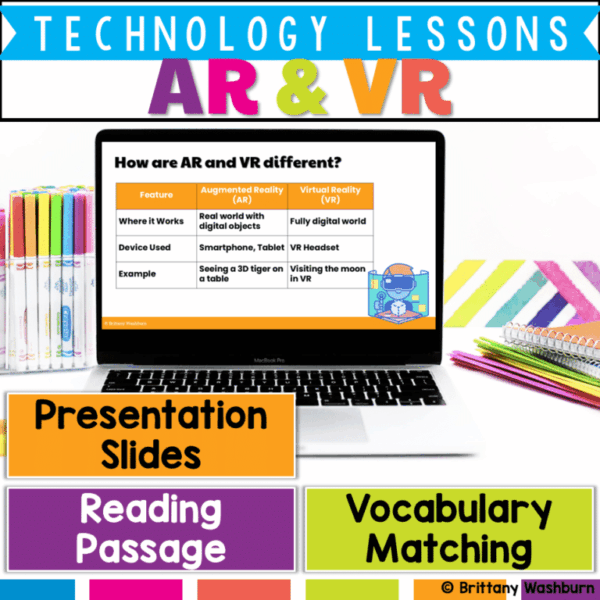
Using devices like smartphones or AR glasses, AR overlays digital information—think 3D models or animations—onto our physical environment. Imagine scanning a dinosaur image in a textbook and suddenly seeing it come to life on your screen, roaring and all. It’s education with a side of WOW!
Virtual Reality (VR)
With VR, users wear headsets that transport them into entirely virtual worlds where they can interact with 3D environments. Whether you’re wandering around ancient Rome or diving deep into the ocean (without getting wet), VR immerses you in experiences that would be hard to replicate in a traditional classroom.
Differences Between AR and VR
The main distinction between AR and VR boils down to integration versus immersion. AR enhances your current reality by adding digital elements to it, while VR completely replaces your reality with a simulated one.
Benefits of AR/VR in the Classroom
Enhanced Engagement and Motivation
When students find themselves in a virtual realm or inspired by interactive AR experiences, they’re often more engaged and curious. With AR/VR, lessons become experiences, making it easier to capture and maintain students’ attention.
Improved Retention of Information
Studies show that experiencing something firsthand—like virtually visiting a historical site—leaves a more lasting impression than reading about it in a textbook. AR/VR allows learners to engage multiple senses, aiding memory retention.
Opportunities for Experiential Learning
AR/VR brings the concept of experiential learning to new heights—literally! Students can conduct virtual chemistry experiments without the safety goggles or dive into historical scenarios for a firsthand perspective. This immersive practice not only builds practical skills but also fosters critical thinking, as students navigate challenges in a risk-free environment. Learning has never been so simultaneously adventurous and safe!
AR/VR Tools and Platforms
Popular AR/VR Tools for Educators
Educators have a buffet of AR/VR tools available nowadays. Platforms like Google Expeditions, Nearpod, and Merge Cube offer ready-to-use content, while tools like Unity and Unreal Engine allow those with a creative spark to design custom experiences.
Facebook Community Recommendations
In addition to the platforms already mentioned, our Facebook community has suggested a few other tools as well.
Check out:
Pro Tip
Make sure to get a class set if you can—and schedule multiple pd on how to use it and how to utilize in the classroom. Your classroom could become the next hotspot for virtual field trips or interactive lessons!
My Teaching Resources for AR/VR
AR and VR Lesson
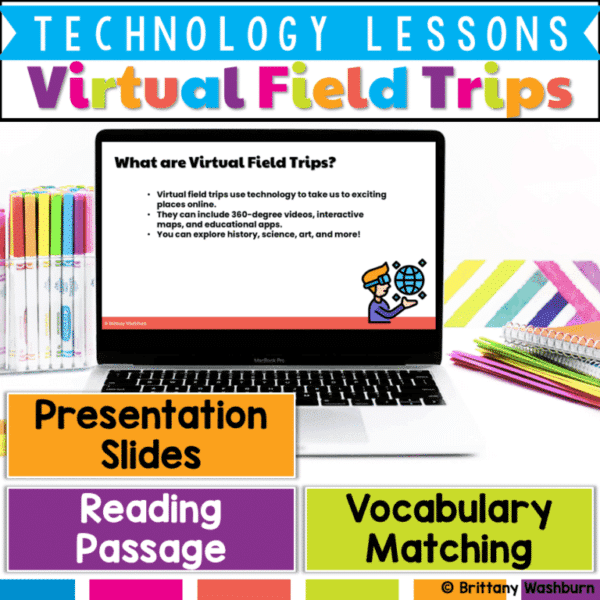
Virtual Field Trips Lesson
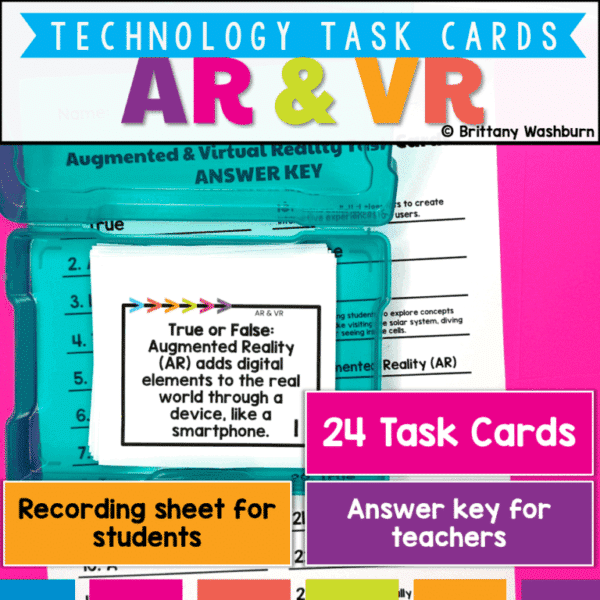
Augmented Reality (AR) & Virtual Reality (VR) Printable Task Cards
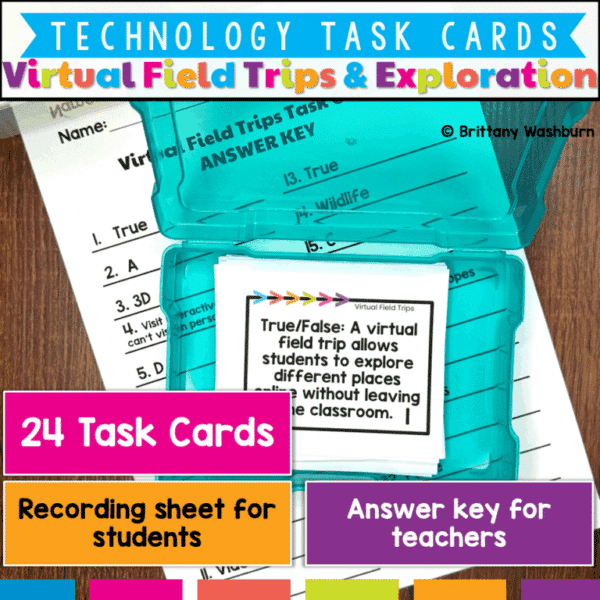
Virtual Field Trips and Explorations Printable Task Cards
Implementing AR/VR
Integration with Existing Curriculum
Integrating AR/VR into the curriculum isn’t just about slapping on a headset and calling it a day. Thoughtful planning is key! Teachers can align these technologies with learning objectives by incorporating them into existing projects, making them complements rather than distractions.
Hardware Requirements and Accessibility
To dive into AR/VR, technology is essential but it doesn’t have to break the bank. Many AR experiences only require a smartphone or tablet, while VR may need a headset and a computer. Schools should consider the budget to ensure all students benefit. Consider grants, or even an equipment-sharing program with other schools in your district.
Guidance for Specific Classroom Implementation
Using Augmented Reality in the Classroom: Tips and Tricks for Success
7 Fun Science Experiments Using Virtual Reality in the Classroom
Exploring Virtual Reality in History Education
How to Use Google Expeditions with your Students
6 Tools for Virtual Field Trips for the Elementary Classroom
Transforming Learning with AR and VR Field Trips
Best Practices for Educators
Assessment Strategies for AR/VR Activities
Evaluating student performance in AR and VR environments can be trickier than grading a paper in invisible ink. To tackle this, educators should develop clear assessment strategies that measure student engagement, collaboration, and understanding. Whether it’s through self-reflection, peer assessments, or project showcases, it’s important to capture the learning that takes place in these immersive experiences accurately.
Teacher Training and Preparedness
Even the best technology is only as good as the person wielding it. Many educators are not adequately trained in using AR and VR tools, which can lead to frustration and underutilization. Imagine trying to navigate a foreign city without a map—yeah, that’s what it can feel like for teachers diving into unfamiliar tech. Ongoing training and support are crucial to ensure educators feel confident and capable.
Continuous Professional Development
Just like students, educators need opportunities to grow and evolve in their practice. Continuous professional development focused on AR and VR is crucial to help teachers stay updated with the latest tools and trends. Workshops, webinars, and collaborative learning communities can provide the support teachers need to confidently integrate these technologies into their classrooms.
The Lasting Impact of AR/VR on Student Engagement
From personalized learning experiences to global collaboration, these technologies can significantly enhance student engagement and foster a love of learning that textbooks alone cannot achieve.
The integration of augmented reality and virtual reality in the classroom offers exciting possibilities for enhancing education and engaging students in meaningful ways. While challenges remain in terms of cost, training, and accessibility, the potential benefits—such as increased motivation, improved retention, and the opportunity for experiential learning—are significant. As technology continues to advance, educators are encouraged to explore and implement AR and VR tools in their teaching practices, paving the way for a more interactive and dynamic learning environment that prepares students for the future.