Seating Scenarios in the Classroom: Arrangements, Charts, Free Choice & More
Seating arrangements in the classroom play a crucial role in shaping the learning experience for students. The way furniture is organized can significantly influence not only student behavior and engagement but also their academic performance. With various options ranging from traditional rows to free choice arrangements and even flexible seating, educators are tasked with the challenge of finding the optimal setup that fosters collaboration, creativity, and effective communication. We will explore different types of seating arrangements, each their benefits and challenges, as well as offer insights into how thoughtful organization can enhance the overall classroom environment.
Importance of Seating Arrangements in Learning Environments
Seating arrangements can make or break a student’s day.
Influence on Student Behavior
Believe it or not, where students sit can significantly influence their behavior. For instance, placing chatty friends next to each other might turn a quiet study session into a full-blown talk show. Conversely, a thoughtful arrangement can foster collaboration, encouraging quieter students to engage more actively.
Effect on Academic Performance
Research shows that seating arrangements can impact academic performance. Students in well-structured environments tend to focus better and achieve higher grades. When students work in efficient groups, they can share ideas and support each other, leading to improved understanding and retention of material.
Types of Seating Arrangements
There’s no one-size-fits-all when it comes to seating arrangements. Each configuration has its own unique traits.
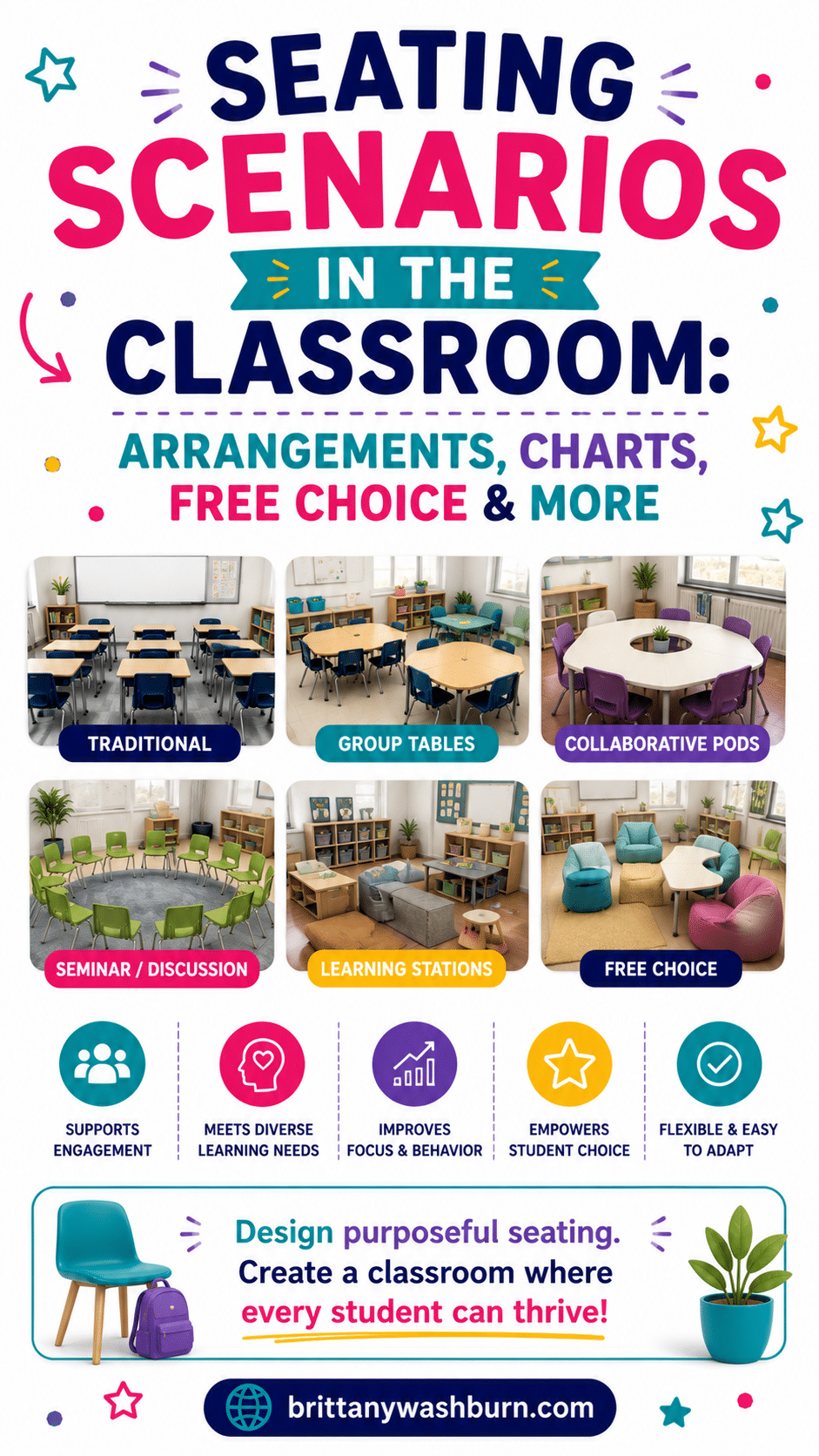
Traditional Rows
The classic rows setup is often favored for lectures, where the teacher is at the helm and students are in a listening mode. While it promotes focus and minimizes distractions, it can also lead to a snooze-fest if not spiced up with some interactive elements.
Grouped Desks
Think of grouped desks as the social butterflies of classroom seating. They encourage collaboration and teamwork, perfect for group projects or discussions. While this arrangement can ignite sparks of creativity, it’s important to keep an eye on potential distractions—playing with just how many desks you group together can help find the right balance for your class.
This can also help you find a balance between assigned seats and free choice… teachers can assign the table but students can choose which seat they sit at.
Circle Seating
This layout promotes open discussion and makes it easy for students to share ideas. It’s terrific for fostering a sense of community but can also feel a bit busy or awkward during work sessions.
U-Shaped Configuration
The U-shaped configuration allows for direct interaction between students and the teacher while also offering a space for group discussions.
The Role of Seating Charts
Seating charts might seem old-school, but they’re incredibly effective tools for maintaining order and routine. In addition, some kids have a hard time finding friends. Assigning seats can ease anxiety. Assigned seats also help keep accountability for the state of the hardware at their assigned station, and minimize time wasted login time when students share computers. Let’s be honest, it can help with learning names too!
It minimizes chaos and helps students know what to expect, leading to smoother transitions and fewer “Who sits here?” moments.
Assigning Seats vs. Free Choice
The battle of assigned seats vs. free choice can stir up some serious classroom drama. Assigned seating can eliminate squabbling over who sits where, while free choice empowers students to pick their spots. While the latter can lead to increased comfort, it can also result in the dreaded “I can’t concentrate with my best friend next to me” dilemma. Teachers must tread carefully on this tightrope..
Adapting Charts for Different Activities
Flexibility is key! Adapting seating charts based on different activities keeps things fresh. Switch it up for group work, discussions, or independent projects. This approach not only keeps students on their toes but also maximizes learning opportunities.
Students can have assigned seats as they enter and do their bellringer, then when it’s time for group projects let them sit anywhere.
You can even arrange seating by who is working on what project if you have students at different spots in the curriculum or selecting from a choice board.
Free Choice Seating: Benefits and Challenges
Empowering Student Autonomy
One of the biggest perks of free choice seating is that it empowers students to take control of their learning environment. By allowing them to choose their spots, they can find the setting that best suits their learning style—whether it’s the quiet corner or the lively table near the window. Who doesn’t love feeling like they’re in charge?
Potential Distractions and Management Issues
However, with great power comes great responsibility—or, in this case, a possibility of distractions. Students might gravitate toward chatty friends or the comfiest bean bag, leading to a less-than-ideal learning atmosphere. Teachers may then find themselves mastering their management skills just to keep the peace (and the noise level down).
Strategies for Successful Implementation
So, how can teachers ensure free choice seating doesn’t turn into a free-for-all? Setting clear expectations and boundaries is crucial. Establishing a few ground rules, like “no spinning in the chairs” and “no distracting your neighbor,” can help maintain balance. Incorporating timed activities can also keep students focused.
Behavioral Caveats
Some teachers make free choice of seats something dependent on age and/or good behavior.
For example, their lower elementary students may have assigned seats while the upper or senior class gets free choice. Others allow students to earn free choice in a later quarter.
Teachers can also simply tell students that if they make a choice to sit next to someone who keeps them from teaching or keeps each other from learning then they will assign a permanent seat.
Once a teacher feels their students have earned seat choice, they keep that seat choice unless they show they can’t handle it. If privileges are lost, then we go back to assigned seats or randomization for one week minimum. First disturbance, stay firm and no second chances. Immediate action such as this is usually quite effective!
Randomization: The Wild Card
Option C is to assign seats randomly each class! Teachers like mixing kids up because I think they should have to interact with lots of different personalities in the class, not just their “friends.”
- Use Classroomscreen class list and group maker tools.
- Use a deck of cards and let the deck suits or numbers pick who works with who.
- Popsicle sticks with numbers on them can correlate to their seat number for the day. Each day they come in they get a new stick/seat.
If they don’t like the groups, remind them that they’re there for less than an hour.
Flexible Seating Options
Types of Flexible Seating
Flexible seating is all about choices! From bean bags to wobble stools, the options are as varied as your students’ personalities. Traditional desks are taking a back seat to collaborative tables, standing desks, and even floor cushions. Teachers can mix and match these seating types to cater to different activities—think comfy nooks for group discussions and bouncy balls for those who need to wiggle while they work.
Impact on Learning Styles
Not all students learn the same way, and flexible seating acknowledges that. Kinesthetic learners thrive in environments that allow movement, while visual learners may benefit from sitting near natural light or engaging displays. By allowing students to choose their seating, teachers can create an atmosphere that caters to diverse learning styles, thereby enhancing retention and comprehension.
Cost and Resource Considerations
Let’s face it: almost no school has a limitless budget. Implementing flexible seating can be cost-effective if done wisely though! Teachers can start small by incorporating cushions or floor seating and gradually introducing more expensive options. Install a calm corner and a refocus desk for when a student needs it.
One creative member of our Facebook Group with a lot of students, to help manage the chaos with her flexible seating, puts every kid in one of three animal groups. Those animal groups rotate through three different seating areas. The favorite area is the couches, and with this system they know they get to sit there at least once a week.
Impact on Student Interaction and Engagement
Promoting Collaboration
When students can choose their seating, they often naturally gravitate towards collaborative arrangements. Group tables and circle setups encourage interaction, making it easier for students to share ideas and tackle projects together. A touch of spontaneity can lead to innovative discussions that might never happen when seated in rigid rows.
Encouraging Peer Relationships
Flexible seating helps break down social barriers! By allowing students to sit in whichever seating types they feel most comfortable, they may mingle with peers they don’t normally interact with. This promotes inclusivity and builds friendships, making the classroom a more welcoming place.
Enhancing Active Participation
Flexible seating can inject life into your lessons by keeping students alert and engaged. When they can choose their own seating, they’re more invested in their learning. Whether it’s collaborating on a project in a comfy corner or brainstorming at a standing desk, active participation becomes easier amongst seating options that offer flexibility.
Strategies for Implementing Effective Seating Arrangements
Assessing Classroom Needs
Before diving into a complete classroom makeover, take a moment to assess your needs. Consider the types of activities you regularly conduct and the dynamics of your students. Do they prefer group work, or are they more independent learners? Understanding these factors will help you create a tailored seating plan that maximizes interaction and minimizes chaos.
Involving Students in the Process
Get students involved in the seating arrangement process, and watch excitement soar! Holding discussions or even voting on preferred seating options gives them a sense of ownership over their learning environment. Plus, it opens up dialogue about why certain arrangements work best, allowing students to articulate their needs—an invaluable skill in itself.
Regularly Reevaluating Seating Arrangements
What works today might not work all year. Regularly reevaluating your seating arrangements is key to keeping the classroom dynamic fresh and effective. Conduct feedback sessions with students to gather insights and make adjustments as needed. Be willing to shuffle things around—literally! A little flexibility with your seating can go a long way in keeping everyone motivated and engaged.
Lessons Learned from Failed Implementations
Not every seating experiment is a home run. Some schools have learned tough lessons from poorly executed flexible seating arrangements, like overcrowded areas or mismatched seating options leading to chaos. By analyzing these missteps, educators can identify pitfalls to avoid—ensuring that even failures can lay the groundwork for future successes.
Research Findings on Seating Arrangements
Studies have shown that classrooms offering varied seating options see higher levels of engagement and learning retention. With data in hand, educators can confidently make the case for flexible seating to skeptical stakeholders!
The arrangement of seating in the classroom is a key factor that can greatly influence the dynamics of learning and interaction among students. By thoughtfully considering various seating options and their impacts, educators can create an inclusive and engaging environment that supports diverse learning styles. Whether utilizing traditional seating charts or embracing flexible arrangements, the ultimate goal remains the same: to foster a space where students feel comfortable, motivated, and ready to learn. As classrooms continue to evolve, so too should the strategies for arranging them, ensuring that every student has the opportunity to thrive.