Websites for Elementary & Middle School Student Research Projects
Developing strong research skills is essential for elementary and middle school students as they embark on academic projects. With a vast array of online resources available, it can be challenging for young learners to navigate and find information that is both safe and reliable. We’ll provide a comprehensive guide to the best websites and search engines tailored for school research projects. With this you can help your students cultivate critical thinking, engage with diverse content, and enhance their learning experience. By equipping both students and educators with effective resources and strategies, we can foster a generation of informed and confident researchers!
Importance of Research Skills in Elementary and Middle School
Research skills are vital for students navigating the vast world of information. In an age where even a cat meme can masquerade as credible news, knowing how to sift through data is like having a superpower.
Developing Critical Thinking Abilities
At its core, research is about asking questions and finding answers. By teaching kids to evaluate sources, differentiate between fact and opinion, and analyze information, we’re helping them flex those critical thinking muscles.
Fostering Curiosity and Lifelong Learning
Research ignites curiosity—the kind that leads to “Why is the sky blue?” or “Can I really turn my brother into a toad?” (Spoiler: No, but you might find some interesting facts about amphibians). When students learn how to research effectively, they become lifelong learners, driven by a desire to discover and understand.
Top Websites for Reliable Information
Not all websites are created equal. Some are like the wise old owl, while others are that friend who insists they saw a UFO last week. Let’s teach our students how to navigate toward the credible sources!
Kid-Friendly Search Engines
Teaching Elementary Students How To Use Search Engines is a great first step. These teacher recommended, kid-friendly search engines help ensure your students don’t stumble down the rabbit hole of dubious websites.
Information Libraries
For more targeted research, websites like these offer vibrant visuals and engaging content. They’re like the fun facts section of a textbook—packed with informative tidbits that make learning fly by faster than a rocket. These resources are not only reliable but also encourage students to dive deeper into subjects that ignite their passions.
- National Geographic Kids
- Britannica Kids
- World Cat
- Enchanted Learning and their Little Explorer’s Dictionary
- PBS LearningMedia, and ReadWriteThink’s Primary Source Strategy Database.
- Animals A-Z
- Fact4Me is not free, but only 50 dollars a year for an entire district.
Interactive Platforms for Engaging Learning
Interactive platforms bring the excitement back into research, making education feel more like an adventure than homework.
Online Libraries and Archives
The Internet Archive and Project Gutenberg are like libraries that don’t close at 5 PM. They give kids access to a wealth of books and historical documents from the comfort of their beanbag chairs. With a little exploration, they can unearth classics or primary sources that make history feel alive.
Multimedia Resources and Tools
Why read about a volcano when you can watch one erupt? Websites like Khan Academy and PBS LearningMedia offer multimedia resources like videos, interactive quizzes, and even virtual field trips. Learning in this format not only captivates students’ attention but also caters to different learning styles—because everyone absorbs information differently, and you can cite a multimedia resource every bit as well as an article.
Tools for Organizing Research and Notes
Note-Taking Applications
Tools like Evernote, OneNote, or Google Keep allow students to jot down key points, organize their thoughts, and even add images or links. Plus, they can access their notes from any device—no more last-minute scrambles to uncover that elusive paper! Encourage students to tag their notes with keywords for easy retrieval later.
Mind Mapping and Brainstorming Tools
When it comes to brainstorming, mind mapping tools like MindMeister, Coggle and other Digital Mind Mapping Tools can be amazing! These platforms let students visually connect their ideas, forming a colorful web of thoughts that even a spider would envy. Mind maps can help students see the bigger picture, breaking down complex topics into manageable pieces. This way, they can make sense of their chaotic thoughts, instead of feeling like they’re trying to untangle a ball of yarn.
Tips for Evaluating Website Credibility
Identifying Authoritative Sources
Not all websites are created equal. Teach students to look for authoritative sources that are credible and reliable. Key indicators include the author’s credentials, the domain (look for .edu or .gov), and whether the information is backed by research or reputable publications.
Understanding Bias and Perspective
Every website has its own personality, and sometimes that personality can be a little biased. Help students recognize the difference between objective information and content that may be pushing an agenda. Encourage them to ask questions like: Who wrote this? What’s the purpose? By evaluating the perspective, students can separate fact from opinion and make their research more balanced—no sugarcoating required.
Encouraging Safe Internet Practices
Teaching Digital Citizenship
Digital citizenship consists of teaching students how to behave, respect others, and ensure their online footprint is something they want to keep. Discuss the importance of kindness, being mindful of what they share, and giving credit where it’s due .
Establishing Online Safety Guidelines
Just as we wouldn’t let kids walk through a dark alley alone, we shouldn’t let them navigate the wilds of the internet without guidelines. Establish clear online safety rules: keep personal information private, think twice before clicking links, and talk to a trusted adult when encountering something unsettling. We can even show you How to Plan an Engaging Internet Safety Research Project for Students.
Brittany’s Own Resources
Tech Careers Posters and Guided Research Project
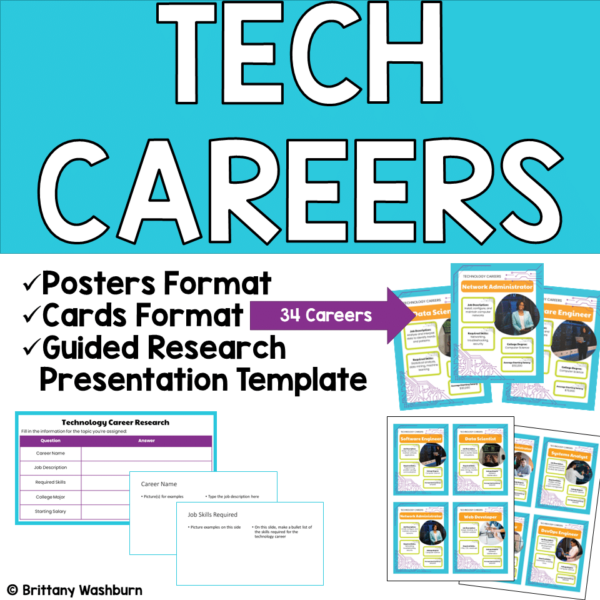
Unlock the world of technology careers with a guided research project! Perfect for grades 4-6, this interactive digital download is designed to inspire young minds and develop vital research and presentation skills. Discover the exciting world of technology and set your students on a path to success with this Tech Careers Guided Research Project. 34 Tech Career Posters provided with all of the facts students need to complete their presentation.
Online Research Discussion Prompts Printable Cards
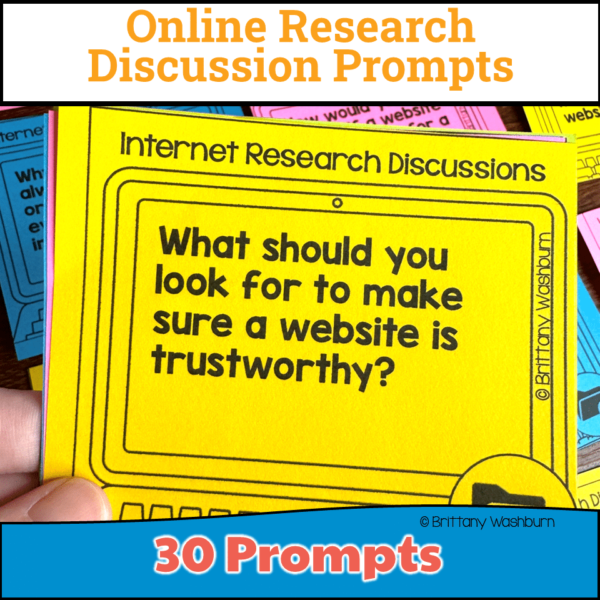
Help your students become savvy digital researchers with these 30 Online Research discussion prompts. Perfect for guiding thoughtful conversations, these printable cards will teach students how to navigate the internet effectively and responsibly.
Online Research Tips and Strategies Posters
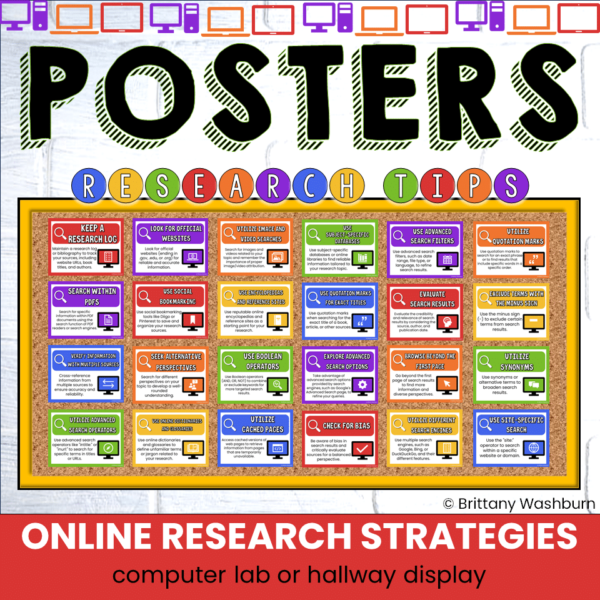
Teach and review online research skills strategies with this set of 25 posters that can be used as a bulletin board or display. Stylish yet academic posters, with both color and black and white options. Just print and set up!
Additional Resources for Teachers and Parents
Workshops and Professional Development Opportunities
Let’s not forget that learning never stops! Encourage teachers and parents alike to seek out workshops or online courses focused on research strategies and digital literacy. Many organizations offer resources that can help educators enhance their skills, which will trickle down to benefit the students.
Final Thoughts
Equipping elementary and middle school students with the right resources for their research projects is crucial for their academic growth and confidence. By utilizing the recommended websites and tools, students can enhance their understanding of various subjects while developing essential research skills. You can also check out our tips for Teaching Online Research Skills Across Grade Levels, or 3 Ways to Teach and Review Online Research Skills to help your students along. Teaching safe internet practices and critical evaluation of sources will further empower young learners in their educational journey as they move out from under your proud, watchful eyes. With the support of teachers and parents, students can thrive in their exploration of knowledge and become adept researchers for the future.