How to Use Choice Boards with Your Students
 How to Use Choice Boards with Your Students
Choice boards are one of those strategies that look simple on the surface but can completely transform how students engage with learning—when they’re used intentionally.
If you’ve ever wanted to give students more voice and choice without creating more work for yourself, choice boards are a powerful tool to have in your teaching toolbox.
Let’s break down what choice boards are, why they work so well, and how to implement them in a way that actually supports learning (and your sanity).
What are choice boards?
What Are Choice Boards?
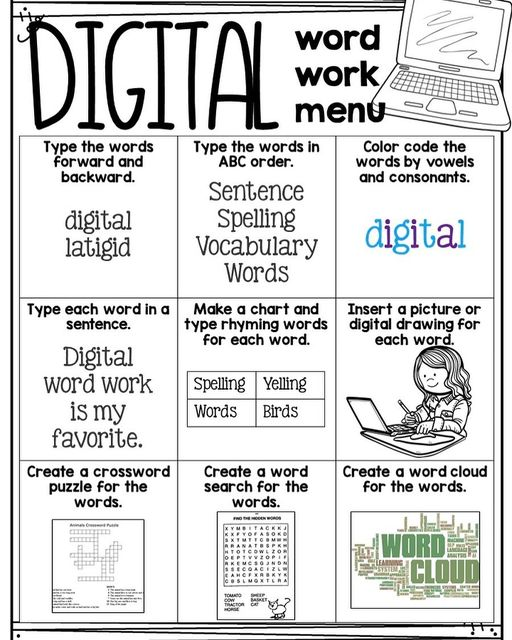
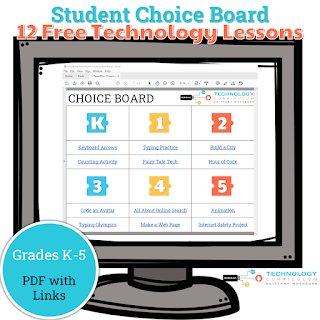
A choice board is a graphic organizer that allows students to choose from multiple ways to demonstrate their learning.
Most choice boards are laid out in a grid format—commonly 6–9 squares—but they can be larger or smaller depending on your goals. Each square represents a different task, activity, or way for students to show what they know.
At their core, choice boards answer one essential question for students:
“How do I want to show my learning?”
Instead of assigning the same task to every student, you offer structured options that all align to the same learning goal.
A choice board is a graphic organizer that allows students to choose from different ways to show their learning. Choice boards are set up in a grid, generally with 6-9 squares (although you can include more or fewer if desired).
Why Use Choice Boards?
Choice boards are popular for a reason—and not just because students enjoy them.
1. They Build Student Agency
When students are given choices, they feel respected. That sense of ownership matters.
Choice boards allow students to:
-
Lean into their strengths
-
Explore topics in ways that interest them
-
Take responsibility for their learning
This is especially powerful in subjects like technology, digital literacy, and project-based learning, where creativity and problem-solving matter just as much as content knowledge.
2. They Balance Structure and Flexibility
Choice boards work because they sit in the sweet spot between:
-
Consistency (same learning goal, same expectations)
-
Variety (different paths to get there)
This balance supports different learning styles, personalities, and working speeds—without turning your classroom into chaos.
3. They Save You Time (Yes, Really)
Well-designed choice boards are meant to be reused.
For example:
-
A vocabulary choice board can last an entire unit—or even the whole year
-
A digital skills choice board can be reused across multiple projects
-
A research or reflection board can be adapted with minimal changes
Once the planning is done, the payoff is huge.
4. They Reduce “What Do I Do Now?” Moments
Choice boards make excellent early finisher hubs.
Instead of scrambling to come up with extension activities, students always know where to go next. That alone can dramatically reduce interruptions and improve classroom flow.
How to Use Choice Boards in the Classroom
Choice boards are incredibly flexible. Here are some of the most effective ways to use them.
Use Choice Boards for Practice and Assessment
Choice boards aren’t just for enrichment.
They can be used to:
-
Practice skills (typing, vocabulary, math facts, digital tools)
-
Explore a new topic before formal instruction
-
Demonstrate understanding at the end of a unit
For assessment, the key is equivalence. Each option should allow students to show the same level of understanding—even if the format looks different.
Pair Choice Boards with Repetitive Tasks
Choice boards work especially well when paired with tasks students do frequently, such as:
-
Vocabulary practice
-
Skill drills
-
Reflection or review activities
The variety keeps students engaged, while the repetition builds mastery. And you avoid creating “new” assignments just for the sake of novelty.
Decide How Students Will Choose
You can structure choice boards in different ways depending on your goals:
-
Choose one activity at a time
-
Complete three in a row
-
Work toward completing every square once over a grading period
-
Choose freely until a requirement is met
The key is being clear and consistent.
Consider Point-Based Choice Boards
Another popular variation is a point-based choice board.
Each activity is assigned a point value, and students must earn a certain total (for example, 10 points).
This allows for even more flexibility:
-
Some students may choose several smaller tasks
-
Others may prefer one or two larger projects
As long as the total learning is equivalent, the path can vary.
Why use them?
-
Choice boards are easy ways for teachers to offer choices, and kids tend to respond very well to the freedom and respect that being offered choices gives them. It lets students have some agency in their own education.
-
They are usually designed to be reused on multiple assignments within the same subject. Vocab assignment planning done for the entire year? Yes, please!
-
They provide a built-in mix of stability and variety to meet the needs of every personality.
-
The level of difficulty of the activities can vary or stay consistent.
-
You can require that students complete items from the choice board in a specific way, such as choosing three choices in a row, pick one at a time with the goal of having completed every activity on the board once over the course of a quarter, or you can simply let students choose at random.

How to implement choice boards in your classroom
-
Choice boards are a great hub to host early finisher activities. Never scramble for an answer to the question “What can I do now?” again.
-
Choice boards can be great tools for learning as well as assessment. Load up the board with different research resources, experiments or broad guiding questions and use them when starting on a new subject to get students hooked.
-
Since choice boards offer so much variety, it is often good to pair them with learning tasks that students are doing over and over (such as vocab, spelling or math skill practice) to balance out the monotony. It also saves you from doing planning that you don’t need to just to tweak tasks slightly so students stay interested.
-
For graded projects, make sure you have arranged things in such a way that students will truly just be showing their knowledge in a different way. You don’t want one section of the board to need to be graded on a 15 point scale, while others only need a 10 point scale to fulfill.
-
On a related note, another variety of choice menus are based on just that – a point system. Teachers assign each task on the board a point value, and every student has to do enough of them to add up to a total such as 10. Some students will choose to do five 2 point activities, while others choose a 6 and a 4. Once again, you just arrange activities so that doing enough of the small ones will result in the same amount of learning as doing larger ones.
-
-
Classes that have never seen a choice board before will need training and practice before this method becomes as effortlessly self-sustaining as it is intended to be. Include clear written instructions right on the board whenever possible, and check their work often in the beginning to make sure they understand how to complete it properly.
Tips for Successful Implementation
Choice boards work best when students know how to use them.
If your class is new to this approach:
-
Model expectations clearly
-
Include written directions directly on the board
-
Check student work frequently at first
-
Provide feedback early to prevent misunderstandings
Once students understand the system, choice boards can become largely self-sustaining.
Final Thoughts
Choice boards are more than just a way to “mix things up.”
When designed intentionally, they:
-
Increase engagement
-
Support diverse learners
-
Reduce planning overload
-
Encourage independence and ownership
They’re a simple structure with a big impact—and one that fits beautifully into technology classrooms, centers, and project-based learning environments.
Pin this post to save it for later, or come back when you’re ready to try choice boards in your own classroom.